
PERTH ROOF REPAIR GUIDE / ELLIS SERVICES GROUP
Roof Leak Detection Perth: Tracing Recurring Leaks After Rain
A recurring roof leak needs its water path traced, not another patch chosen from the ceiling stain alone. Ellis Services Group investigates the roof covering, junctions and drainage above the affected area and repairs the components responsible for water entry. This guide explains how the evidence fits together and why a previous repair can leave a leak unresolved.
We provide: Roof leak repairsDiscuss your roof repair
Water paths between roof entry and ceiling stains
Water can move along under-roof layers or building members before reaching a ceiling. A stain identifies the affected room, but the roof directly above it is only part of the investigation. We relate the indoor position to the roof slopes, valleys, walls and penetrations nearby.
Our team checks adjoining tiles or sheets as well as the reported area. This helps distinguish an entry defect from the route water follows after entering. Existing interior photographs support that investigation without requiring the owner to enter the roof space.
Ceiling stains after rain
A bedroom ceiling stain appearing after the first heavy rain is a reason to investigate water entry, even if no drip is visible. Note when the mark first appeared and whether it grows. Roof defects are one possible source; plumbing, equipment and condensation may also be relevant. A photograph cannot identify the cause by itself.
Stains and other moisture sources
A ceiling stain records moisture at the visible surface, not necessarily a hole immediately above it. Explain whether it appears in dry weather, near plumbing or when equipment runs. These observations help direct the investigation instead of automatically booking roof sealing or painting over the mark.
Water travel before a stain appears
Water can move along connected materials before reaching an interior lining. A stain may therefore be below a different part of the roof from the entry point. Describe both the indoor location and any safely visible external feature, but leave close-up tracing and roof-space access to the assessment.
Distance between entry and visible water
Roof slopes, junctions and supporting materials can separate the point of entry from the point where water becomes visible. Marking the room and approximate position helps the inspection connect observations. Do not assume a distant rust mark or broken tile explains the stain without checking the route between them.
Leaks during heavy rain and wind-driven rain
A downpour increases flow through valleys, gutter outlets and downpipes. An obstruction or damaged drainage connection can allow water to back up while the roof covering appears intact. We inspect the connected drainage route alongside laps and flashings.
Wind-driven rain can expose a weak overlap or junction differently from calm rain. Tell us which weather events trigger the leak and whether dripping begins immediately or later. We use that history to focus inspection, then specify work from the physical defects found.
Heavy-rain leaks and drainage capacity
A leak that appears only in heavy rain can involve the amount of water reaching a junction or drainage route. Record whether rain intensity, duration or wind changes the pattern. The roof covering, flashings and outlets need assessment together; dry conditions between storms do not show that the defect has disappeared.
Wind-driven rain at connections
Wind-driven rain can reach connections differently from rain falling in calm conditions. A leak during wind is a useful observation, not proof of a particular flashing or tile defect. Include the affected room and any wind direction you already know; there is no need to go outside in bad weather to investigate.
Investigating a leak that returns after repair
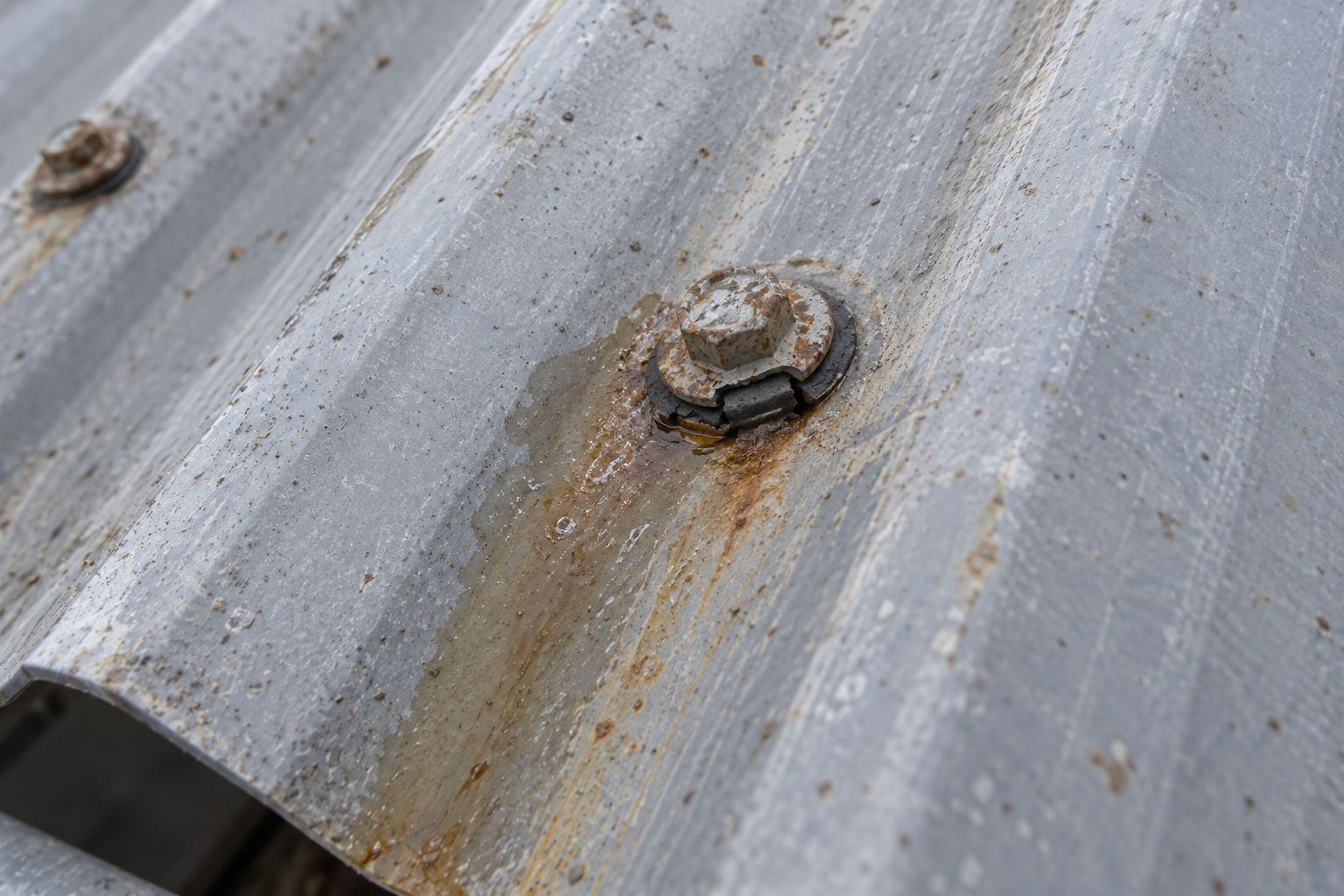
A previous patch can leave adjoining corrosion, a deteriorated fixing or a poorly connected flashing untreated. We review the repair area and inspect beyond its edges rather than assuming the same surface needs more sealant.
The repair can involve replacing a damaged tile, compatible fastener work, renewing an affected flashing or restoring drainage. The important distinction is between closing the entry defect and simply covering an indoor symptom. The proposed scope identifies the roof components to be repaired.
Recurring leaks after repair
A returning leak needs the earlier scope reviewed alongside the current weather pattern and roof condition. Share which components were worked on, when the leak returned and any existing records. The original source may remain, another connection may be involved, or conditions may have changed; repeating the same patch does not identify the source.
Sealant and unresolved water paths
Sealant at a visible joint does not establish that the full water path has been corrected. The surrounding material, overlaps and drainage may need different work. If the same area leaks after sealing, discuss investigation of those connections before adding more sealant or treating the roof surface.
From leak investigation to a defined repair scope
Our assessment brings together the affected rooms, rain history, covering material, previous work and accessible roof details. We explain the identified defects, materials and access arrangements before the agreed repairs begin.
Completion checks focus on the repaired connections, adjoining covering and connected drainage. The checks appropriate to the job are agreed with the scope; photographs and records help explain the work completed. Our metal fastener leak-repair case shows the roof condition, fixing details and completed work in a photographed repair sequence.
Repeat leaks and inspection timing
Leak inspection enquiries between rain events
You can contact us between rain events. Existing water marks, photographs and the timing of previous leaks help us prepare an inspection. Keep clear of wet roof access and tell our team if water is actively dripping.
Investigating leaks after previous repair work
We inspect the previous repair and its adjoining roof components, explain the remaining defects and prepare the repair work needed for the current condition.
Leak investigation and fastener repair records
METAL ROOF FASTENER LEAK REPAIR IN ROLEYSTONE. →
Roof leak repairs → · Arrange an inspection →
Perth office: 140 St Georges Terrace, Perth WA 6000. Call 0405 878 406 or email ellisservicesgroup3@outlook.com.
Ground-level observations to prepare before an inspection
- Mark the affected room and whether the first sign is staining, dripping or overflow.
- Record the timing and weather conditions of each event rather than only the latest leak.
- Keep a record of previous repairs and whether the water-entry pattern changed afterward.
- Provide safely obtained existing photographs; leave roof access and diagnosis to the inspection.
These observations help explain the enquiry; they do not establish a diagnosis or a safe DIY repair method.
Leak location, timing and repair history
Send the suburb, affected room or roof area, when water appears, roof material if known and previous work details. Mention solar installation, nearby equipment or changes preceding the leak without assuming causation. Existing safe photos are optional. For rentals, include the authorised owner or manager and access contact; do not climb onto the roof to gather evidence.
Do not climb ladders, access roofs or approach damaged electrical equipment to collect information. Do not work from a roof or elevated gutter without controlled access. Photographs are optional and do not replace an on-site assessment by Ellis Services Group.
Flashing materials and adjoining roof components
We assess the flashing shape, adjoining roof materials and connected drainage before specifying repairs. The written quote identifies the affected components and suitable materials.
See the photographed chimney flashing example → · Roof valleys & flashing repairs →
Solar penetrations and other moisture sources
Roof leaks noticed after solar installation
Tell us when the solar installation and the first leak occurred, and share any earlier repair records. Timing alone does not establish the cause. The roof covering, fixings, penetrations and connected drainage need assessment; electrical equipment must be handled by the appropriate specialist.
A ceiling stain is a starting point, not proof of a particular defect. Note whether water appears in heavy rain, wind-driven rain or dry weather. Water can travel before becoming visible indoors. Where condensation, plumbing or equipment is suspected, the next step may involve another trade rather than a roof patch. Include previous sealant work if the same area is leaking again.
Roof leak repairs → · Discuss inspection arrangements →
Condensation, plumbing and roof moisture
Moisture in dry weather, dampness associated with equipment and rain-related water entry need different observations. Condensation occurs when moisture in the air condenses on a cooler surface, so it is not the same mechanism as rain entering a roof defect. Explain the timing; the appropriate assessment may involve another trade rather than roof sealing.